• About Us
  • Insights & News
  • Participate
    • CUSIC Research Studies
  • About Us
  • Insights & News
  • Participate
    • CUSIC Research Studies
Contact Us

News

Three Fast Beverages

Introduction

In recent years, the cannabis industry has expanded its product offerings beyond traditional consumption methods, such as smoking or edibles. The introduction of cannabinoids in beverages represents a significant and promising advancement in this area. This unique delivery method provides distinct advantages for consumers and broadens the scope of usage. Cannabis-infused beverages have been heralded for their fast-acting effects and versatility, making them a great alternative for social gatherings and indoor events. Furthermore, drinking is discrete and socially acceptable, broadening their appeal to a wider range of consumers.

A significant focus in this burgeoning sector of the cannabis industry has been the development of advanced drug delivery systems that use emulsification to stabilize cannabinoids in aqueous solutions. However, cannabis-infused beverage companies have faced challenges to objectively and accurately demonstrate the fast-acting efficacy of their products. Existing evidence about the efficacy of drug delivery methods has been carried on through pharmacokinetic studies that quantify concentration levels of a substance, like THC, in body fluids, such as blood, urine, and saliva.

However, there is no direct correlation between THC concentration levels in the body and the actual effects this cannabinoid creates on the brain when it is acting. After the THC effect disappears (offset time), this substance remains in body fluids several hours or days, which makes it hard to accurately determine the actual onset time of the THC psychoactive effect.

Zentrela has introduced a novel and standardized method for objectively quantifying the effects cannabis has on the brain, called Cognalyzer®, that is based on electrical brain activity (EEG data) analysis. Our non-invasive EEG neurotechnology records the EEG of cannabis consumers from multiple regions of the brain (right and left sides of the frontal, temporal, occipital and parietal brain lobes) in a standardized, safe and easy way. EEG analysis is conducted through scientifically validated Machine Learning algorithms that detect complex but specific brain activity changes in different regions of the brain specifically triggered by THC. Read more about it in the section: Cognalyzer® EEG (brainwave) analysis.

In this publication, we present the results of using the Cognalyzer® EEG-based method to analyze the brain activity of 89 test subjects who consumed 3 beverages (Deep Space, XMG – Mango and Pineapple, and Versus Black Cherry Rapid Seltzer) manufactured by different companies.

Our results provide the first EEG-based objective and quantitative evidence about the fast-acting efficacy of beverages emulsified with 10 mg of THC to create psychoactive effects.

Methodology

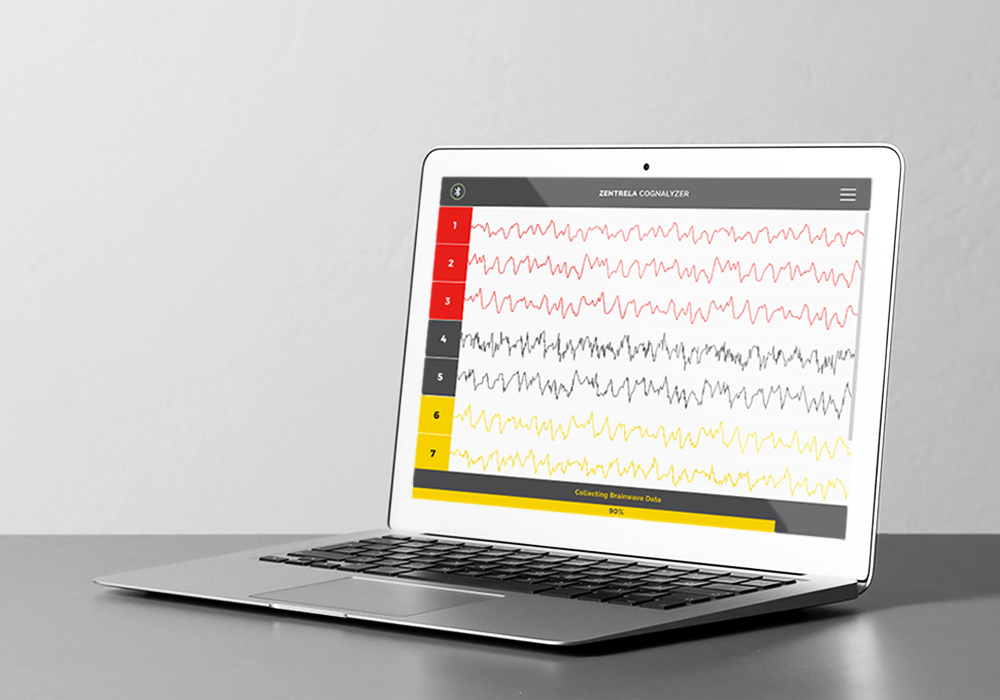
Zentrela’s non-invasive portable EEG device and desktop application were used to record consumer EEG data from 8 different regions of the brain (right and left sides of the frontal, temporal, parietal and occipital lobes).

The standardized process of collecting EEG data (called “EEG Test ”) consists of ~2-minute-long recordings depending on the quality and integrity of the EEG data that is being recorded. Internal and external noise is ignored.

Two EEG Tests were administered before product consumption to calibrate the Cognalyzer® AI solution and 7 more EEG tests were administered after 5, 10, 15, 20, 25, 30, 45, and 60 mins product consumption.

Cognalyzer® EEG (brainwave) analysis was used to convert EEG Tests into THC psychoactive effect levels (PEL) in a standardized scale from 0% to 100%. Learn more about it in the following section.

The cubic spline interpolation method was used to accurately characterize PELs minute by minute post product consumption and per participant / visit. Then, the PELs of all the beverage consumers were aggregated.

Statistical analysis was conducted to determine the higher and lower bounds of the aggregated PELs using >90% confidence intervals. The onset time interval of the beverage psychoactive effect curve was determined by getting the time point of the first aggregated PEL above 5% and the time point of the first aggregated PEL above 15% when the lower bound of the confidence interval is above 90%.

Study results

The results of this EEG-based study with 89 test subjects characterizes the rapidness of cannabis beverages, with 10 mg of THC, to create psychoactive effects. Ninety percent (90%) of the beverage consumers, who participated in this study, started to experience the THC psychoactive effect of 10 mg THC beverages between 11 and 20 minutes (Beverage onset time) post consumption. The Figure displayed above shows the characterized THC psychoactive effect profile of beverages. The statistical analysis, definition and characterization of the onset time information is explained in the Methodology section.

Subsequent scientific articles will be published to study the specific onset time of each beverage (per SKU) given the fact that each one is formulated differently to create unique cannabis experiences. It’s important to highlight that beverages with a lower or higher amount of THC (e.g. 2 mg or 100 mg) may significantly alter the onset time of a cannabis product. Further articles will provide objective evidence about this.

In addition, we’re in the process of studying and publishing more scientific articles about the psychoactive effects of edibles and inhalables like pre-rolls and vapes.

If you’re interested in using our portable neurotechnology for your own research or licensing these study results for educational, informational, promotional, e-commerce, or research purposes, please contact Roy Agostino at ragostino@zentrela.com.

Cognalyzer® EEG (brainwave) analysis

After 5 years (2016-2021) of full R&D laser-focused efforts the neurotechnology company Zentrela, Inc. which is led by Israel Gasperin (an engineer,entrepreneur, and founder of Zentrela), and Dr. Dan Bosnyak (a McMaster neuroscientist, Director of the neuroscience McMaster LIVELab, and CSO of Zentrela), developed the only scientifically proven method,  called Cognalyzer®, for objectively quantifying the actual effects cannabis products have on the brain.

Its novelty and unprecedented accuracy relies on using Machine Learning in large EEG datasets to do complex EEG analysis that we humans had not been able to do in order to find complex but specific EEG features directly associated with the effects substances like THC have on the brain.

The second novelty of Zentrela’s solution is a standardized method for recording EEG data (called “EEG Test”) and quantifying the presence of a substance effect.

The drug effect quantification method consists of recording ~2 mins of EEG data from 8 different regions of the brain (right and left sides of the frontal, temporal, parietal and occipital lobes) using Zentrela’s proprietary EEG headset calculating and then calculating the amount of time (within the ~2-min recording) that a subject is experiencing EEG alterations. The amount of time is calculated by the number of EEG segments that are classified by Zentrela’s scientifically validated AI as “altered” by the THC effect (called “PEL”).

The accuracy and objectivity of the Cognalyzer® measurement of cannabis psychoactive effects has been independently validated by the clinical research organization, KGK Science, Inc., and the following peer-reviewed publications:

https://link.springer.com/article/10.1007/s12325-021-01718-6

https://link.springer.com/article/10.1007/s40120-021-00293-w

Since 2021, Zentrela has been using its proprietary neurotechnology, among other research tools, to independently quantify the non-therapeutic cannabis effects of cannabis products (beverages, edibles, and inhalables) and other key contributing factors like consumer information (demographics, psychographics, etc.) and product consumption patterns (consumption amount, method, duration, etc.).

After having conducted Observational studies since 2021 with many hundreds of consumers on  tens of legal products, Zentrela has amassed the world’s largest scientifically derived database of cannabis effects.

The purpose of developing this new type of scientific evidence about cannabis effects is to share this information with all the stakeholders of the cannabis industry to help them accomplish their objectives in a faster, better, safer, and/or best possible way:

  • Consumers, to have access to trustworthy, objective data backed byneuroscience in order to make informed purchase and consumption decisions.
  • Brand owners, to conduct regulatory-compliant educational marketing at retail that generates product trial and differentiates their brand.
  • Retailers, to differentiate their retail brand as a science-driven education business that helps them meet their mandate of supporting consumers to make informed decisions while moving products faster.
  • Drug delivery companies, to objectively prove the efficacy (fast, strong, consistent effects) of their novel solution(s).
  • Product developers, to reliably find optimal formulations that effectively create intended effects. They can use our neurotech internally in their labs or partner with us to externally conduct their research.
  • E-commerce platforms, to enrich their platform with science-backed product effect content that will help consumers choose the right product for them.


Research Framework

Research Organization and SponsorZentrela Inc.
Scientific Research Model:CUSIC™ non-therapeutic cannabis effect research
Health Canada’s Research Framework:Observational Study approved by an independent ethics research board (IRB)
Independent Ethics Research Board (IRB):Advarra Inc.
Consumer Attestation:Full informed consent form reviewed and approved by the IRB.
Principal Investigator:Dr. Dan Bosnyak
Authors:Dr. Dan Bosnyak, Upmanyu Sharma, Israel Gasperin Haaz
GTIN# of cannabis products:‍00688083002779 – Deep Space from Canopy Growth.


‍00838860000133 – XMG – Mango and Pineapple beverage from Truss Beverages.


‍00824164000993 – Versus Black Cherry Rapid Seltzer beverage from Valens

Cannabis Administration:The participants in our study brought their own cannabis products and freely consumed them under our observation. Additionally, Zentrela validated that the participants obtained the products from the legally regulated Canadian market.
Study Group Size:89 test subjects
Research Tools:Cognalyzer AI-driven EEG research tool
Zentrela’s Research Facility Location:CL1 231 Main St W, Hamilton, ON, L8P 1J4, CANADA.

Conclusion

Using our scientifically validated Machine Learning algorithms, non-invasive neurotechnology and novel EEG-based method for measuring cannabis’ psychoactive effects, we determined the average onset time interval of 3 beverages that contain 10 mg of THC but are developed by different licensed producers.

These results demonstrate one of the several ways our EEG-based research can be used to study the effects of cannabis in a more objective, accurate, quantitative way. In addition to the onset time determination, our first AI solution, called GA56, can characterize the THC effect potency, duration, and other effects.  These findings just described will be released soon.

It’s important to highlight that these findings only represent an average onset time of three beverages. The actual onset time of each beverage will be published in subsequent studies.

Through this comprehensive investigation, we aim to contribute valuable insights into the onset time of the THC psychoactive effect associated with the beverage consumption method, thereby enhancing informed decision-making for cannabis consumers.

Collaborations

Contact us to explore research collaborations to leverage this objective science-backed data for additional research, informational, educational, marketing, e-commerce or regulatory purposes.

Roy Agostino – ragostino@zentrela.com

by ghisrael

Canadian Neurotechnology Company

Canadian Neurotechnology Company Zentrela Launches Groundbreaking Education Program on Cannabis Product Effects Based on Novel Brainwave Research

Initiative Aims to Address the Consumer Information Gap for Informed Cannabis Consumption

Zentrela, a leading Canadian neurotechnology company, is proud to announce the launch of an innovative education program focused on providing consumers reliable information about the effects of cannabis products. Through cutting-edge brainwave research, Zentrela aims to empower consumers with the knowledge they need to make informed purchase and consumption decisions in the rapidly growing cannabis industry.

Consumer Problem: Lack of Reliable Information
As the cannabis market continues to expand, an increasing number of infrequent, inexperienced, and new consumers are seeking reliable information about the potential effects of cannabis products. This critical information gap has left many consumers unsure about the impact of different cannabis products and has hindered their ability to make informed choices.

Industry Problem: Unmet Consumer Need
Until now, this significant consumer need has remained largely unaddressed due to the scarcity of comprehensive, scientific research in this field. Zentrela recognized this issue since the federal Canadian legalization and in 2021 started the world’s largest brainwave study to objectively quantify and classify the psychoactive effects cannabis products have on the brain. As of today, more than 800 consumers of beverages, edibles, pre-rolls and vapes have participated in the Zentrela research project. The neurotech tech company is announcing today the beginning of a series publications of scientific articles where they will describe the results of their massive cannabis effect research using their proprietary wearable brain device and Machine Learning algorithms to accurately describe the effects specific products create for consumers. For the first time, new or inexperienced consumers will have neuroscience-backed product effect information to make informed purchasing and consumption decisions.

Our Solution: Unveiling the Truth Through Research
Having successfully piloted their science-driven consumer education approach since 2022 with leading retailers in the Greater Toronto Area and Collective Project, an innovative cannabis beverage brand, Zentrela is now prepared to scale up their program and share their findings with a broader audience of Canadians. This scale-up phase includes publishing the results of their extensive, independent research to address a wide range of consumer questions such as how onset times vary between cannabis beverages, edibles, pre-rolls, and vape products. Zentrela has forged partnerships with age-gated media companies, including KIND Magazine, SESH CLUB, Grow Opportunity and Cannabis Prospect, as well as influencers in age-gated social media platforms such as Instagram, Reddit, Twitter, to ensure broad distribution of this scientific content.

Furthermore, Zentrela is partnering with retailers who are committed to educating consumers and helping them make more informed decisions. By leveraging their study publications, Zentrela will provide these retailers with science-backed cannabis product effect information, enabling budtenders to objectively inform consumers and enhance their overall experience. Retailers currently participating in the program include Spiritleaf Little Italy, Neku Cannabis, The Niagara Herbalist and Curious Cannabis Co. These collaborations will ensure widespread dissemination of accurate information and reach cannabis consumers at point of sale.

by ghisrael

Zentrela Education Program

Canadian Neurotechnology Company Zentrela Launches Groundbreaking Education Program on Cannabis Product Effects Based on Novel Brainwave Research

Initiative Aims to Address the Consumer Information Gap for Informed Cannabis Consumption

Hamilton, July 12, 2023 – Zentrela, a leading Canadian neurotechnology company, is proud to announce the launch of an innovative education program focused on providing consumers reliable information about the effects of cannabis products. Through cutting-edge brainwave research, Zentrela aims to empower consumers with the knowledge they need to make informed purchase and consumption decisions in the rapidly growing cannabis industry.

Consumer Problem: Lack of Reliable Information
As the cannabis market continues to expand, an increasing number of infrequent, inexperienced, and new consumers are seeking reliable information about the potential effects of cannabis products. This critical information gap has left many consumers unsure about the impact of different cannabis products and has hindered their ability to make informed choices.

Industry Problem: Unmet Consumer Need
Until now, this significant consumer need has remained largely unaddressed due to the scarcity of comprehensive, scientific research in this field. Zentrela recognized this issue since the federal Canadian legalization and in 2021 started the world’s largest brainwave study to objectively quantify and classify the psychoactive effects cannabis products have on the brain. As of today, more than 800 consumers of beverages, edibles, pre-rolls and vapes have participated in the Zentrela research project. The neurotech tech company is announcing today the beginning of a series publications of scientific articles where they will describe the results of their massive cannabis effect research using their proprietary wearable brain device and Machine Learning algorithms to accurately describe the effects specific products create for consumers. For the first time, new or inexperienced consumers will have neuroscience-backed product effect information to make informed purchasing and consumption decisions.

Our Solution: Unveiling the Truth Through Research
Having successfully piloted their science-driven consumer education approach since 2022 with leading retailers in the Greater Toronto Area and Collective Project, an innovative cannabis beverage brand, Zentrela is now prepared to scale up their program and share their findings with a broader audience of Canadians. This scale-up phase includes publishing the results of their extensive, independent research to address a wide range of consumer questions such as how onset times vary between cannabis beverages, edibles, pre-rolls, and vape products. Zentrela has forged partnerships with age-gated media companies, including KIND Magazine, SESH CLUB, Grow Opportunity and Cannabis Prospect, as well as influencers in age-gated social media platforms such as Instagram, Reddit, Twitter, to ensure broad distribution of this scientific content.

Furthermore, Zentrela is partnering with retailers who are committed to educating consumers and helping them make more informed decisions. By leveraging their study publications, Zentrela will provide these retailers with science-backed cannabis product effect information, enabling budtenders to objectively inform consumers and enhance their overall experience. Retailers currently participating in the program include Spiritleaf Little Italy, Neku Cannabis, The Niagara Herbalist and Curious Cannabis Co. These collaborations will ensure widespread dissemination of accurate information and reach cannabis consumers at point of sale.

About Zentrela
Zentrela is an independent research organization that utilizes novel non-invasive neurotechnology to accurately and objectively quantify and classify the effects cannabis products create for consumers. With a mission to become the most trusted and comprehensive provider of cannabis product effect information, Zentrela is dedicated to empowering consumers with the knowledge they need to make informed consumption decisions.

Join Zentrela’s Mission
If you are a cannabis retailer, social media influencer, or media company with the goal of educating cannabis consumers and contributing to a well-informed community, we invite you to reach out to Zentrela. Together, we can shape a future where consumers have the information they deserve to make confident choices.

by ghisrael

Brain Waves and AI
 

Everybody knows the cliché in cannabis that indicas produce a sedative effect and sativas produce an uplifting high. And everybody realizes that consumers often seek out the highest THC percentages on products when they shop at dispensaries, looking to get the most “bang for their buck.”

But within the cannabis industry, it’s also well-known that true indicas and sativas are rare — most commercial genetics have been cross-bred, hybridized and renamed so many times, they no longer fall into a simple, binary classification — and that THC percentages alone cannot tell the whole story of a specific product.

Zentrela founder and CEO Israel Gasperin believes his company has developed a technology to help consumers cut through the noise and get a better understanding of how a product might affect them.

Zentrela uses brain wave analysis and artificial intelligence to evaluate and quantify the psychoactive effects of cannabis products on different types of consumers, giving licensed producers an entirely new tool to improve product development and to revolutionize their marketing efforts.

“We can scientifically demonstrate that two products with the same amount of THC does not necessarily create the same consumer psychoactive experience,” Gasperin says. “Even the same product creates different psychoactive experiences, depending on the type of consumer — frequent versus infrequent consumers.”

The Pivot to Cannabis

Gasperin, who is originally from Mexico and emigrated to Canada about seven years ago, founded Zentrela on the idea of using neurotechnology to measure and manage driver fatigue. He spent a couple years researching the transportation and insurance industries on everything related to fatigue.

But around 2016, it became apparent that Canada was on a path to legalize recreational cannabis at the federal level and Gasperin began to learn the challenges of drug testing for cannabis. The standard blood, urine, saliva and hair analyses used for detecting the presence of THC only measured the concentration of the substance within one’s body and were not accurate measurements for a person’s level of impairment, which had important consequences with regards to law enforcement and workplace safety concerns.

“At that point, I decided to pivot to cannabis and impairment detection, rather than fatigue detection,” Gasperin says.

In 2018 — the same year Canada passed the Cannabis Act, legalizing marijuana for adult use — Zentrela began developing its first algorithms to identify the complex patterns in brain waves when brain function is altered by consuming cannabis.

While Zentrela was initially funded to help law enforcement with impaired driving, Gasperin didn’t see that as a commercially viable way to utilize the technology the company had developed. He began meeting with Canada’s licensed producers and realized the emerging market need for ways of analyzing the effects different cannabis products have on consumers. In Canada, most products are described by their terpene and cannabinoid profiles, not the effects they have on consumers, because the government prohibits companies from using that type of marketing, unless the effects can be scientifically proven.

With Zentrela’s artificial intelligence-backed algorithms and wearable neurotechnology, “we can objectively and scientifically measure effects of cannabis products,” Gasperin says.

This opens an entirely new realm of possibilities for producers looking to understand their own products, looking to understand their competitors’ products and looking to transform the marketing of their products to connect with the ideal target audience.

Gasperin is careful to point out that Zentrela does not conduct clinical studies, but it provides scientific results at a fraction of the cost and time. Typically, he says, it would cost about $300,000 and take two years to hire a contract research organization to conduct a clinical study on the effects of a single, specific product.

“When you take into consideration that these companies have hundreds of products, and every product can differ in effects or consumer experiences, it is just not sustainable to conduct this type of study,” Gasperin says.

He explained to licensed producers that Zentrela’s consumer experience data, collected objectively and scientifically from the company’s research into consumers’ psychoactive experiences, could be licensed to producers at a fraction of the cost of a clinical study.

“They love it and they said they really want to do it,” Gasperin says.

Utilizing the Data

Gasperin says he expects producers to use the Zentrela data for research and development and marketing.

For R&D purposes, producers want to understand everything they can about consumer psychoactive experiences for different products. Zentrela can provide them information about onset time, intensity and duration of the psychoactive effects for specific consumer types, taking into account whether the individual is a regular, experienced consumer or a lower-tolerance, infrequent consumer.

“The exciting part is we already have objective evidence that two products with the same amount of THC, but a different formulation, can create a completely different experience,” he says. “One creates a faster, stronger psychoactive experience than the other one.”

Products with a faster onset and more intense high are more likely to be enjoyed by experienced consumers, whereas a more mellow product is generally preferred by less frequent consumers — so this information is critical for producers to know, especially when both are tested at the same level of THC.

Producers also want to know the performance of their competitors’ products as a way of benchmarking and conducting a SWOT analysis (strengths, weaknesses, opportunities and threats). This helps them understand ways to differentiate their products, identifies product gaps that might exist and gives them a basis for refining their formulas to better achieve results they’re looking for.

In terms of marketing, Gasperin believes Zentrela will help usher in a new era for cannabis companies and consumers. No longer will producers be forced to rely solely on their branding and packaging or abstract details such as cannabinoid ratios and terpene content. Zentrela’s data will help companies reach their target audience more effectively — and in a regulatory compliant manner, Gasperin says — thus, helping build brand loyalty and trust.

“In 2022, there will be a shift in marketing, now that we can do consumer experience-driven marketing,” he says.

GARRETT RUDOLPH

Marijuana Venture editor-in-chief.


by ghisrael

McMillan Joins Zentrela

Zentrela Inc., a leading innovator in cannabis experience research for business and scientific applications, today announced that Jay McMillan, CEO of UberGreen Inc., has joined its board of advisors responsible for Strategic Business Affairs. McMillan is an accomplished corporate development and M&A executive with a passion for product innovation. Leveraging 25 years of international markets experience, he has an extensive background in new market development and strategic engagements with Fortune 500 organizations in the consumer packaged goods, technology, and consumer electronics spaces. His most recent role was as Chief Development Officer with HEXO Corp, a leading Licensed Producer of cannabis in Canada, where he played a pivotal role in helping to grow HEXO into a top-three licensed producer. At HEXO he headed up identifying strategic business development opportunities for M&A, joint ventures, and key partnerships in addition to being responsible for R&D, innovation, and commercialization.

“Jay is a major figure in the industry, and I couldn’t be more excited to have him on our team,” said Israel Gasperin, founder of Zentrela. “One of our core goals for 2022 is to expand the number of licensed producers that use our scientific consumer experience data to help them drive stronger product revenues, and Jay brings unparalleled experience in building those kinds of relationships.”

“Zentrela represents a game-changing opportunity that will impact the entire cannabis industry,” said Jay McMillan. “Cannabis consumers and industry participants will all benefit from objective, scientific data that accurately characterizes the experiences created by cannabis products on specific consumer types. What does this mean for the cannabis industry? It means that R&D and product development professionals can objectively understand the experiences that their product formats and formulations create. It means category management and marketing can better target consumer personas that will be delighted by the product. It means that education programs can be created to allow consumers to better understand products and select their desired experience. It means Provincial Boards and Retailers can curate and categorize products by experience.”

Until now there has been no reliable way for cannabis producers to accurately represent the effects that their products have on people who use them, leading them to rely on inaccurate and vague descriptions based on anecdotal opinion. Zentrela is changing the game by using advanced AI algorithms and their proprietary neurotechnology platform to analyze the reactions of cannabis users in a laboratory setting to develop objective profiles of the experiences their products create for different types of consumers. This information is used by LPs to create stronger Informational Promotional campaigns and better position themselves in a highly regulated, crowded, and competitive market. It also empowers industry stakeholders including retailers, workplace safety groups, and law enforcement agencies to make informed, data-driven decisions.


About Zentrela

Zentrela is a Canadian neurotechnology pioneer and creator of the Cognalyzer, the only scientifically validated test for measuring the psychoactive effects of cannabis. Founded by neuro-entrepreneur Israel Gasperin, Zentrela is creating the world’s largest scientific database of cannabis consumer experiences.

About UberGreen

UberGreen is an independent consultancy focused on the development and execution of Growth Strategies for clients focused on the cannabis and technology markets.

Media contact:

Richard Berman

(647) 294-8372

richard@verbfactory.com

by ghisrael

Lifting the Veil

As cannabis research restrictions loosen, we can only expect what we know about cannabis to grow exponentially in the coming years.

KRISTINA ETTER – Kristina Etter spent 20 years in corporate IT with a niche in mobile technology and IoT in agriculture. Today, she combines her love of technology with a passion for cannabis as the Editorial Director for Cannabis Tech.

One of the arguments we continue to hear from cannabis naysayers is that there’s not enough research to support the claims. While this sounds like a valid complaint, the truth of the matter is that globally, cannabis is one of the most researched drugs on the planet. Dr. David Bearman, M.D., Executive V.P. of the American Academy of Cannabinoid Medicine, stated in 2018, “there have been more than 25,000 articles printed in peer-reviewed medical journals on cannabis, cannabinoids, and the endocannabinoid system, since 1995.”

NORML recently updated those statistics and summarized the data, highlighting that before 1999, there were less than 5,000 studies published. But since 2010, nearly 23,000 scientific papers have been published; and the numbers are growing annually. According to data from the National Library of Medicine and PubMed.gov, researchers published more than 3,500 peer-reviewed scientific papers in 2020 alone.

Since 1970, as a Schedule I substance, government-approved marijuana research in the United States was extraordinarily limited and came with miles of red tape. As laws continue to change and research restrictions loosen, it’s safe to assume that what we know about cannabis today will pale in comparison to what we learn about cannabis over the next decade.

But, until the shroud of restriction is lifted, some research facilities and even cannabis producers are taking matters into their own hands.

RECOGNIZING THE NEED FOR DATA

A hemp-derived CBD producer, CBDistillery is making strides to better understand the consumer and how the various cannabinoids work for them. Through a partnership with Releaf App, an app designed to help consumers track and monitor their cannabis consumption and results, CBDDistillery hopes to provide the foundational data necessary to encourage higher-level research.

Speaking with Tony Schwartz, Director of Affiliate and Strategic Partnerships at Balanced Health Botanicals, which includes their flagship brand CBDistillery, he explained why these partnerships are critical to the industry’s future.

“One of the main reasons we engaged in the partnership with Releaf is because there’s so much alignment around what these studies could mean, in terms of equipping consumers with critical information, as it relates to how well products perform for their specific needs” Schwartz stated.

With this partnership, CBDistillery and Releaf App are seeking 1,000 volunteers to participate in two studies to evaluate the efficacy of hemp-derived Cannabidiol (CBD) and Cannabinol (CBN). Consumers who participate in the private studies, or “Pathfinder Missions,” will receive products from CBDistillery and will be asked to answer a series of questions using the Releaf App for a period of 30 or 60 days. To sign up for the research, apply here.

Schwartz hopes that the data collected from their research could help stimulate research at a higher level. “We’re trying to be as patient as we can until things do open up a bit for us where we can start executing on some higher-level research, but you’re right, and until then, we’re sort of left to our own devices to invest in and participate in these studies.”

CANNABIS PRODUCERS PARTNERING WITH RESEARCH FACILITIES

In a podcast a few weeks ago, Cannabis Tech spoke with the leadership team at Stillwater Brands. As a cannabis consumables producer in Colorado, Stillwater produces water-soluble THC and CBD, QuickSticks (flavored sublingual powder), and nano-infused gummies. A leading cannabis edibles manufacturer, the company decided just producing the products wasn’t enough – they wanted to prove the science.

By partnering with Colorado State University, the company is starting to do research to prove the efficacy of their nano-formulations and monitor the absorption rate of their cannabinoids. By taking voluntary blood tests from test subjects before and after consuming their products, Stillwater Brands and the university researchers intend to prove or disprove the efficiency of nano-formulated edibles and beverages.

Now, imagine pairing the information collected from this study with the brainwave technology from Zentrela. Suddenly, researchers not only know how much of the cannabinoid is getting into the bloodstream, but they have measurable data for impairment to compare and contrast. With fewer restrictions on cannabis research, the possibilities are unlimited. While none of the aforementioned studies are considered clinical data, recent headlines suggest the doors to these opportunities are opening as well.

DEA ANNOUNCES NEW MARIJUANA SOURCES FOR RESEARCH

For decades, any US Government-approved cannabis research had to use cannabis grown by the one, and only, federally approved marijuana grow in the nation at the University of Mississippi. Unfortunately, the products produced by the college were a far cry from the products being sold in the legal market.

Although the DEA started accepting applications for additional manufacturers during the Obama era, nothing moved forward until recently. According to a recent article on Marijuana Moment, a number of organizations, including Biopharmaceutical Research Company, Scottsdale Research Institute, and Groff NA Hemplex LLC received notification that their applications had been “conditionally accepted” and are taking the next steps in the approval process.

According to the article the DEA stated, “Each applicant will then be authorized to cultivate marijuana—up to its allotted quota—in support of the more than 575 DEA-licensed researchers across the nation.”

Without question, the doors to fully demystifying cannabis are starting to open and we can be certain that the number of cannabis studies will only continue to rise. As for the forthcoming results and how they’ll impact our understanding of the herb, the possibilities are limitless.

by ghisrael

New Study Shows…

A recent study revealed how combining neurotechnology with saliva testing can reduce the chances of falsely claiming cannabis impairment due to THC.

June 3, 2021
Madeline Colli

A study released in the scientific journal Advances in Therapy explained that when combining neurotechnology with saliva testing, it can drastically reduce the chances of falsely claiming cannabis impairment due to tetrahydrocannabinol (THC) residual detection. The research from this blind study was performed by KGK Science on behalf of Zentrela.

Not much is known on the effects of the brain caused from cannabis psychoactive properties or how accurate those effects can be measured. Saliva, blood, and urine have been the traditional methods used by law enforcement and employers to detect and quantify THC-compound levels. It is well recognized that there is no direct correlation between THC concentration levels in bodily fluids and if an individual is experiencing psychoactive effects associated with THC. This creates an issue because employers and law enforcement agencies are unable to confirm impairment in an individual, which leads to the possibility of inaccurate determinations of cannabis impairment. False determinations can negatively affect the reputation and employment of individuals who may be consuming legal cannabis products responsibly.

In KGK Sciences’ study, the data illustrates how Zentrela’s Cognalyzer neurotechnology can detect and quantify the psychoactive effects of cannabis. The data further highlights that neurotechnology, when combined with an oral fluid test used for detecting and assessing THC levels, immensely improves the accuracy of testing and decreases the chances of falsely claiming cannabis impairment due to THC residual detection.

Zentrela will now be collaborating with strategic research partners to correlate its objective cannabis psychoactive effect scale with cognitive performance data used to specify a psychoactive effect level which indicates when it is not advisable for cannabis consumers to work or drive a vehicle.

“The ability to definitively measure the psychoactive effects of cannabis allows us to begin addressing the problems related to cannabis consumption that affect the industry and the broader community,” said Dr. Dan Bosnyak the Chief Science Officer at Zentrela (1,2). “A scientifically objective cannabis psychoactive-effect test has endless applications for cannabis producers and product manufacturers, for law enforcement, and for employers in many industries.”

Having an accessible scientific database of cannabis product effects also solves one of the many challenges plaguing producers and brands in the recreational cannabis industry, which is the availability of regulatory-compliant cannabis effect data.

“Without this information, producers cannot differentiate their products and inform consumers about the different effects created by their recreational cannabis products, retailers cannot meet their CANCELL mandate to educate consumers and promote responsible cannabis use and, of course, consumers are missing out on the information that they require to make more accurate and informed decisions about recreational cannabis consumption,” said Israel Gasperin the CEO of Zentrela (1,2). “The data we are generating will give retailers and producers access to a centralized source of scientifically-derived product effect information, which will benefit the entire cannabis industry value chain.”

Gasperin further added that until now there has not been an accurate, scientific-based test for quantifying the psychoactive effects of cannabis. “We have clearly demonstrated that neuroscience powered by artificial intelligence (AI) can accurately detect and quantify the psychoactive effects of cannabis,” said Gasperin. “This represents a huge potential for Zentrela to become the definitive source for specific, science-based data on cannabis product effects for the entire industry. And we are still at the beginning of our journey. There is no reason we cannot apply this proven neurotechnology to other drugs and industries.”

By combining neurotechnology and saliva testing, it will help ease some of the conflict that arises for not just law enforcement and employers, but consumers as well.

References

  1. https://finance.yahoo.com/news/neurotechnology-combined-saliva-testing-boosts-140500087.html
  2. https://www.news-medical.net/news/20210407/Neurotechnology-combined-with-saliva-testing-improves-accuracy-in-measuring-psychoactive-effects-of-cannabis.aspx
 
 
by ghisrael

Neurotechnology Combined

A new study, released today in the scientific journal Advances in Therapy is providing critical evidence that neurotechnology combined with saliva testing can drastically reduce the likelihood of falsely determining cannabis impairment due to THC residual detection. The independent, blind study, conducted by KGK Science on behalf of Zentrela, confirms that Zentrela’s pioneering neurotechnology is the industry’s most accurate test for detecting and quantifying actual cannabis psychoactive effects, and unlocks the potential for new testing protocols for law enforcement and employers.

There is limited understanding of the brain effects caused by cannabis psychoactive properties, and limited means to accurately quantify those effects. Law enforcement and employers have relied upon traditional methods for detecting and quantifying THC-compound levels using body fluids such as saliva, blood and urine. However, it is well known that there is no direct correlation between THC concentration levels in body fluids and whether an individual is actually experiencing psychoactive effects associated with THC. This means law enforcement or employers cannot accurately confirm impairment, leading to the possibility of inaccurate determinations of cannabis impairment. These determinations can negatively affect the reputation and employment of individuals who may be consuming legal cannabis products responsibly.

The KGK Science study describes the performance of Zentrela’s Cognalyzer® neurotechnology to detect and quantify cannabis’ psychoactive effects and shows that when combined with an oral fluid test for detecting and quantifying THC levels, neurotechnology can drastically improve the accuracy of testing and minimize the likelihood of falsely determining cannabis impairment due to THC residual detection.

For the next phase of its research, Zentrela will collaborate with strategic research partners to correlate its objective cannabis psychoactive effect scale with driving and cognitive performance data to determine a psychoactive effect level (cutoff level) that indicates when it is not advisable for consumers to drive or work.

“The ability to definitively measure the psychoactive effects of cannabis allows us to begin addressing the problems related to cannabis consumption that affect the industry and the broader community,” says Zentrela Chief Science Officer, Dr. Dan Bosnyak. “A scientifically objective cannabis psychoactive-effect test has endless applications for cannabis producers and product manufacturers, for law enforcement, and for employers in many industries.”

An available scientific database of cannabis product effects also unlocks one of the most significant challenges facing producers and brands in the recreational cannabis industry: availability of regulatory-compliant cannabis effect data.

“Without this information, producers cannot differentiate their products and inform consumers about the different effects created by their recreational cannabis products, retailers cannot meet their CANCELL mandate to educate consumers and promote responsible cannabis use and of course, consumers are missing out on the information that they require to make more accurate and informed decisions about recreational cannabis consumption,” says Zentrela CEO, Israel Gasperin. “The data we are generating will give retailers and producers access to a centralized source of scientifically-derived product effect information, which will benefit the entire cannabis industry value chain.”

“Until this point, there simply hasn’t been an accurate, science-based test for quantifying cannabis psychoactive effects. We have clearly demonstrated that neuroscience powered by artificial intelligence (AI) can accurately detect and quantify the psychoactive effects of cannabis. This represents a huge potential for Zentrela to become the definitive source for specific, science-based data on cannabis product effects for the entire industry. And we are still at the beginning of our journey. There is no reason we cannot apply this proven neurotechnology to other drugs and industries.”

Zentrela Inc. is advancing the understanding of the brain effects of recreational cannabis and is creating the world’s largest scientific database of cannabis product effects. Visit us at https://www.zentrela.com.

by ghisrael

Could neuroscience be

New headset measures impact on the brain, CEO says solution will help employers measure impairment.


Since the legalization of cannabis in 2018, cannabis impairment and drug testing have grown to be huge areas of interest for employers around Canada.

Current testing methods remain limited, various sources describe drug testing as “invasive” and “inaccurate” as they don’t accurately measure the amount of tetrahydrocannabinol (THC), the principal psychoactive constituent of cannabis, in the body.

Or at least, even if THC is found in the body, it doesn’t necessarily mean that the worker is impaired because THC can linger in the body for up to three weeks.

Numerous tech solutions have cropped up in recent years, including mobile apps and even fingerprint testing. Adding to this roster, a neuroscience-based impairment testing might be the next big thing.

Zentrela

“The existence of the current drug test is because of our lack of understanding of the human brain,” says Israel Gasperin, founder and CEO of Zentrela, Inc.

Zentrela is a social purpose for-profit company founded in Hamilton, Ont. The company’s mission is to use neurotechnology to describe cannabis effects in the most objective and accurate way. It has received backing from a number of sources, including the provincial government.

The solution created by the company mixes science and tech. Gasperin says that he created the company because despite the legalization of recreational cannabis, current drug tests weren’t adequate enough to accurately test THC levels. He said he had a vision for an “objective, science-based system.”

Zentrela received $1.1 million from the Ontario government to fund its research, and also received backing from the Ontario Centre of Innovation and the Ontario Brain Institute.

This research funding, says Gasperin, has allowed for the company to come up with commercially viable new technology.

Connected tech

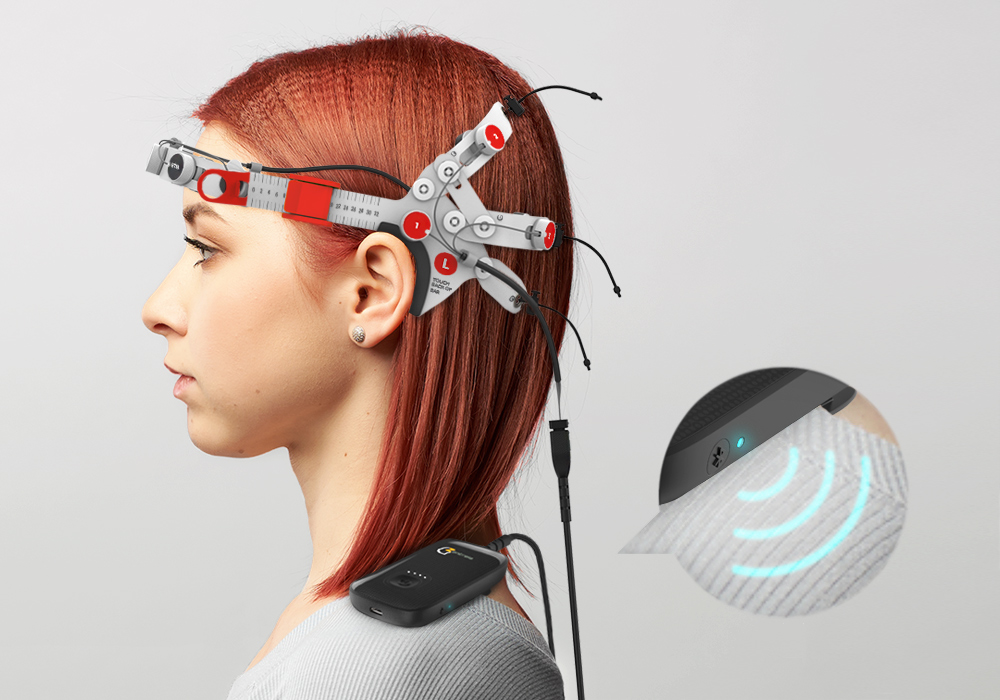
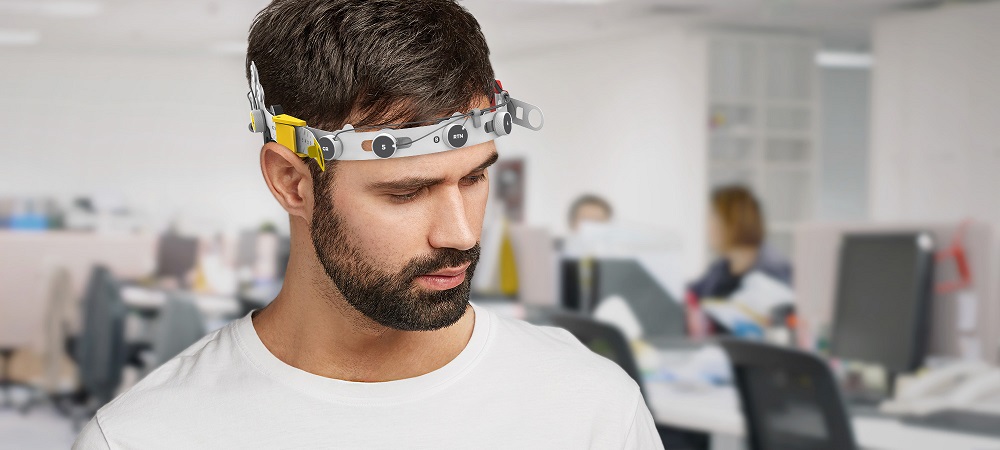
Zentrela’s solution is a headset called the ‘Cognalyzer’. As opposed to traditional body fluid analysis, the headset measures the impact of THC on the brain to test the wearer for cannabis impairment.

This neurotechnology detects and measures the effects of cannabis based on brainwave analysis – it converts brainwaves into a cannabis effect level which is then easily measurable by the user (and, potentially, by the employer).

Part of the device is disposable, while the electronic component is reusable (and linked to Bluetooth to track usage). The results, says Zentrela, are quick and effective.

“Within 15 mins you can have an objective, science-backed process,” says Gasperin.

Gasperin says that though the company eventually wants to offer the device in workplace settings, the first step for them is to pilot the test for road side law enforcement, who could use it to test drivers suspected of being impaired.

Privacy concerns

Aside from concerns around effectiveness, another criticism levelled at body fluid testing (most often urine testing) is that it is invasive – not to mention a relatively unpleasant experience for the testee.

Gasperin says that safety and privacy are of big importance to Zentrela:

“All of the research that we are conducting needs to be approved by an ethics board. Part of the protocol for a wearable is safety, but also includes best practices to keep private the participation of consumers.”

Adoption of tech in the OHS sector has been accelerated by the pandemic, legal updates – such as the legalization of cannabis – could help push the adoption of science-based solutions.

This is a sentiment shared by Gasperin, who says that this is just the beginning and that neurotech will evolve rapidly in future.

“[Zentrela is] finding something so complex,” he says, “we believe in our vision.”

by ghisrael

This headset measures

Aside from impairment testing, Ontario-based Zentrela wants to work with cannabis producers to generate accurate product claims

You’ve probably heard about breathalyzers and blood tests that detect THC, but what about a brainwave-measuring headset?

Canadian neurotechnology company Zentrela Inc. has developed the Cognalyzer, a device that measures the brain’s electrical activity to tell if a person is high.

After completing independent research on the efficacy of the device, the firm is being contracted by licensed producers to generate data on the psychoactive effects of various cannabis products.

While not designed to be used at the roadside, the headset could assist workplaces and law enforcement departments in providing faster, fairer and more accurate in-office sobriety tests, according to Zentrela.

This headset measures brainwaves to tell if you're high or not - Israel Gasperin
Zentrela founder and CEO Israel Gasperin has a background in computer engineering and project management. Submitted photo

Combining brainwave with saliva analysis, employers and law enforcement can now determine if a person is testing positive for THC in a saliva test because they’re feeling high, and not due to salivary residue from who knows when, Zentrela founder and CEO Israel Gasperin explains.

The headset is an electroencephalogram (EEG) that collects brainwave information and correlates it with a THC-induced psychoactive state. According to recent studies, the headset is approximately 85 per cent accurate in measuring the psychoactive effects of THC.

“We will build a huge database of cannabis effect or brainwave data that allows the scientific team led by Dr. Dan Bosnyak to develop these proprietary algorithms that basically transform brainwaves into a psychoactive effect level,” Gasperin tells Mugglehead in a video call.

When it was founded in 2015, the Hamilton, Ontario-based company was working on developing a device to detect driver fatigue. After noticing a need for cannabis-impairment detecting devices, they pitched the Cognalyzer to the Ontario Centre of Innovation and the Ontario Brain Institute. The pitch got the firm $1.1 million in funding to continue with the project and run human trials.

To avoid bias in the results, Zentrela hired contract research organization KGK Science to test the device.

A recent study published in the journal Advances in Therapy assessed the accuracy, sensitivity and specificity levels of the Cognalyzer to identify brainwave alterations following cannabis inhalation. Results showed that the headset is highly accurate in detecting the psychoactive effects of THC.

“Combining Cognalyzer results with oral fluid concentrations reduced false-positive oral fluid test results by up to 49 per cent,” reads the study.

Zentrela’s chief scientific officer Dan Bosnyak says the latest research focused on accurately detecting if someone’s high, but his company is in the process of preparing another study that will look at refining the headset’s ability to tell how high a person is.

“And that is actually where the magic really is: in the ability to not only say, ‘You are under the effects,’ but rather have how much exactly are those effects,” Bosnyak says.

Read more: Cannabix vies to be first to capitalize on difficult cannabis impairment market

Read more: Stoners drive less impaired than doobie newbies

Read more: Landmark study first to show low-dose CBD doesn’t impair driving

Using brainwave data to map the effects of cannabis

Zentrela has started to work with licensed producers, offering cannabis consumer research using the Cognalyzer by correlating brainwaves with psychoactive effects.

Gasperin says that by building a database of product effect insights, those could later be used for informational purposes while maintaining regulatory compliance.

This headset measures brainwaves to tell if you're high or not - Zentrela Cognalyzer banner
The Cognalyzer uses electroencephalography (EEG) to objectively characterize brainwave alterations associated with cannabis use. Submitted photo

“We just started the first-of-its-kind observational study with cannabis-infused beverages that unexperienced or infrequent consumers bring, and we use our neurotechnology to map the complete experience,” Gasperin adds.

Zentrela’s medium-to-long-term goal is to help law enforcement and employers to improve safety, while protecting consumers from inaccurate information.

By conducting more research, Gasperin says producers, retailers and policy makers will be able to make more accurate educational and promotional material.

In future, Zentrela will look for research partners that have driving simulators to correlate a scale of psychoactive effects with the ability to drive safely.

“Once we have more robust scientific literature that demonstrates a more solid relationship of psychoactive effects to impairment then at that stage we will enter to the workplace safety and law enforcement market,” Gasperin said.

Update (2021-5-5 1:30 p.m. PST): This article has been updated with further clarification from Zentrela that initial research on the Cognalyzer has been completed.

by ghisrael

12
Page 1 of 2